Can Stem Cell Therapy Help Sports Injuries Recover Faster?


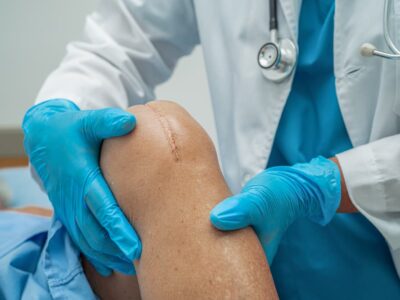
Athletes rarely ask for miracles. What they want is simpler, and harder: a treatment that gets them back to training without trading away the next five years of joint health. That is where Stem Cell Therapy enters the conversation. It is often presented as a way to accelerate healing, reduce downtime, and possibly avoid surgery. The reality is more nuanced.
For some sports injuries, biologic treatments that use stem cells or stem cell related products may have a rational role. For others, the science is still immature, the marketing runs ahead of the data, and expectations can become wildly unrealistic. If you are a competitive athlete, a weekend runner, a coach, or a parent of a young player, it helps to understand what this therapy can and cannot do.
The short answer is that Stem Cell Therapy may help certain sports injuries recover better in selected cases, but faster is not guaranteed. In many situations, the real value is not shaving a week or two off recovery. It may be improving tissue quality, reducing symptoms, or supporting a healing environment when standard care alone has stalled. That distinction matters, because athletes tend to focus on the calendar, while the body cares about biology.
Why sports injuries are so difficult to speed up
The body heals different tissues at very different rates. Muscle strains can recover surprisingly well because muscle has a decent blood supply. Tendons and cartilage are another story. The Achilles tendon, patellar tendon, rotator cuff, and meniscus often heal slowly because they are relatively underperfused, exposed to repetitive load, and vulnerable to reinjury before the tissue regains full strength.
That is why so many sports medicine decisions involve tension between pain relief and durable healing. A runner with chronic patellar tendinopathy may feel better after rest and a short course of anti inflammatory medication, then flare up the moment hill sprints return. A soccer player with a small cartilage defect in the knee may function well enough for months, only to discover that swelling keeps returning after matches. A baseball pitcher with partial ulnar collateral ligament damage may improve with rehab, but not enough to tolerate throwing volume.
Conventional treatment remains the backbone for most of these cases. Rest, load modification, physical therapy, eccentric strengthening, bracing, anti inflammatory strategies, image guided injections, and sometimes surgery still do most of the heavy lifting. The question is whether Stem Cell Therapy can improve that process in a meaningful way.
What Stem Cell Therapy usually means in sports medicine
The term sounds precise, but in practice it covers a broad and sometimes confusing range of treatments. Most commonly, clinics are referring to cells harvested from a patient’s own bone marrow or adipose tissue, processed in some form, and then injected into an injured area under ultrasound or fluoroscopic guidance. Bone marrow aspirate concentrate, often shortened to BMAC, is one of the more common examples.
These preparations are not all the same. The exact cell mix depends on where the cells came from, how they were processed, how much volume was collected, and what regulations apply in that country or state. Some products contain relatively small numbers of actual stem cells but still include growth factors and other biologically active cells that may influence healing. That is one reason sports medicine specialists often speak more broadly about orthobiologics rather than promising a pure stem cell effect.
This distinction can disappoint patients who have read bold claims online. Many expect an injection filled with regenerative cells that rebuild tissue like a construction crew. The biology is less cinematic. In most cases, the hoped for benefit is not that the injected cells become brand new tendon or cartilage in large numbers. It is more likely that they modulate inflammation, signal nearby cells, and support a more favorable repair response.
Where the therapy shows the most promise
Tendon injuries generate a lot of interest because they can become stubborn, painful, and career limiting. Chronic tennis elbow, gluteal tendinopathy, proximal hamstring tendinopathy, and some patellar tendon problems are common examples. These conditions often linger despite months of careful rehabilitation. In selected cases, biologic injections may help when progress plateaus.
The challenge is that tendon pathology is not one disease. A reactive tendon in the middle of a season behaves differently from a degenerative tendon that has been overloaded for a year. A partial tear differs from diffuse tendinosis. Stem Cell Therapy may have a more logical role in chronic, poorly healing tissue than in an acute strain that would likely recover with standard care.
Knee injuries also drive demand. Athletes with focal cartilage defects, early degenerative changes, or certain meniscal problems are particularly interested. Cartilage has very limited regenerative capacity, so any https://blogfreely.net/godiedshnb/how-stem-cell-therapy-supports-the-bodys-natural-healing-process treatment that might improve symptoms or delay progression attracts attention. Some physicians combine microfracture or other surgical procedures with biologic augmentation in an attempt to improve repair tissue. Results are mixed, but this is an area of active research.
Ligament injuries sit in a middle ground. A partial UCL injury in a throwing athlete, for example, is sometimes treated nonoperatively with biologic support and structured rehab. There are reports of successful return to play, but outcomes depend heavily on the grade and location of the tear, the sport, and how much stress the ligament must tolerate on return. A complete ACL rupture in a cutting sport is a different scenario entirely. No reputable clinician should present Stem Cell Therapy as a replacement for reconstruction in a clearly unstable knee.
Faster recovery versus better recovery
This is one of the most important distinctions in the whole discussion.
Athletes hear “regenerative medicine” and assume fewer days missed. Sometimes that happens. More often, what clinicians care about is whether the tissue heals in a more durable way, with fewer symptoms and less likelihood of repeating the cycle three months later.
Imagine two basketball players with similar patellar tendon pain. One rests, takes a short break from jumping, then returns in four weeks because pain is manageable. The other spends twelve weeks in a combined program of heavy slow resistance, load management, and a biologic injection after failing earlier rehab. The second athlete may not return faster, but may return with a tendon that tolerates the season better. To the athlete staring at the schedule, twelve weeks feels slower. To the clinician trying to prevent a chronic problem, it may be the smarter path.
That is why honest sports physicians are careful with the word faster. Symptom relief can come before structural recovery. MRI changes can lag behind function. High level athletes can compensate remarkably well and still be one bad landing away from another setback.
What the evidence actually says right now
The evidence is promising in pockets, thin in others, and difficult to compare across studies. That last point is easy to overlook. One trial may use bone marrow concentrate for knee osteoarthritis in middle aged recreational athletes. Another may use adipose derived cells for cartilage lesions in a very different population. A third may examine tendon pain with different rehab protocols and different outcome measures. Lumping all of that together under “Stem Cell Therapy works” is not serious medicine.
For knee osteoarthritis and some cartilage related problems, there is evidence suggesting symptom improvement in selected patients, particularly pain and function scores over months rather than days. Whether that translates to true cartilage regeneration in a clinically decisive way remains less clear. Imaging findings are inconsistent, and symptom improvement does not always mean tissue restoration.
For tendinopathies, some small studies and case series suggest benefit, especially in chronic cases that have failed standard care. But protocols vary widely. Some patients receive a single injection, others multiple. Some undergo concurrent needling or tenotomy. Some do intensive rehab, others do very little. It becomes hard to determine which ingredient drove the result.
For major acute ligament ruptures and severe structural injuries, the evidence is much weaker if the claim is that Stem Cell Therapy alone can replace established treatment. There may be adjunctive roles, but anyone presenting it as a universal shortcut is overstating the science.
That does not mean the field lacks value. It means the best current position is selective optimism. Experienced clinicians have seen patients improve. They have also seen expensive treatments do very little.
The injuries where caution matters most
Some of the strongest sales pitches tend to appear where the evidence is softest. That is a warning sign.
A complete tendon rupture, such as a fully torn Achilles, usually has clear structural failure. Rehabilitation and sometimes surgery determine the outcome. Injecting a biologic product into a gap does not erase the mechanical problem. The same is true of highly unstable ligaments and fractures that need proper fixation.
There is also a category of athlete who is especially vulnerable to disappointment: the person with diffuse pain, multiple prior treatments, and no crisp diagnosis. When the MRI shows mild wear in several places and symptoms do not map neatly to one lesion, almost any advanced injection can become a vessel for hope. These are the cases where disciplined diagnostic work matters more than enthusiasm.
I have seen recreational athletes spend large sums chasing regenerative procedures while neglecting the basics that actually govern recovery, namely sleep, nutrition, progressive loading, strength deficits, movement mechanics, and return to sport planning. Biologics do not compensate for poor rehabilitation.
A practical way to judge whether you are a reasonable candidate
The most sensible candidates usually share a few features. They have a clear diagnosis. The injured structure is one where biologic support has at least a plausible rationale. Standard treatment has been done properly and long enough to judge. Surgery is either not yet necessary or carries enough downside that a less invasive option is worth discussing. The athlete also understands that rehab remains mandatory.
Here is a short reality check that can help frame the decision:
- If the diagnosis is vague, do not move to biologic treatment yet.
- If a full course of quality rehab has not happened, that comes first.
- If the injury is clearly surgical because of instability or a complete rupture, injection therapy is unlikely to be the main answer.
- If the main promise being offered is a guaranteed fast return, be skeptical.
- If the clinician cannot explain exactly what is being injected and why, keep looking.
That checklist may sound conservative, but conservatism protects athletes from the most common mistake in this area, paying for complexity before earning the right to need it.
What treatment and recovery actually look like
The procedure itself is usually not the hard part. Harvesting bone marrow, often from the pelvis, can be uncomfortable but is generally brief. The concentrate is prepared and then injected into the target area with image guidance. Some clinics use adipose tissue based preparations instead. Post procedure soreness is common, especially in the first several days.
The larger issue is what happens next. Recovery protocols vary by body part and diagnosis. A tendon injection may involve initial unloading, followed by a gradual strengthening progression over weeks. A knee injection for cartilage related symptoms may require reduced impact activity, controlled range of motion work, and staged return to training.
Athletes sometimes assume that an advanced injection permits an aggressive comeback. Often the opposite is true. The clinician may ask for a more disciplined rehabilitation window so the biology has a chance to work. This can frustrate highly motivated competitors who feel decent after a week and want to test the area.
The timeline also depends on the endpoint being measured. Some people notice pain changes within several weeks. Functional gains may take longer. Structural change, where it occurs at all, usually takes months. That is why judging the result at ten days is almost meaningless.
Risks, limitations, and the problem of hype
Even when a treatment uses your own cells, “natural” does not mean risk free. There are procedural risks from the harvest and injection, including pain, bleeding, infection, and damage to nearby structures, though serious complications are uncommon in experienced hands. There is also the less obvious risk of delaying more appropriate treatment.
Cost is another limitation. Many Stem Cell Therapy procedures are not covered by insurance, particularly when considered investigational for a specific indication. For some athletes, that cost is manageable. For others, it creates pressure to believe the treatment worked, even when the outcome is ambiguous.
Then there is the language problem. The regenerative medicine market rewards bold claims. Clinics often advertise broad success across arthritis, tendon tears, ligament damage, and even conditions that have little to do with sports medicine. If every injury seems like a perfect candidate, that is not a sign of innovation. It is a sign of weak patient selection.
A reliable specialist is usually comfortable saying no. They will tell a sprinter that a grade 1 hamstring strain does not need Stem Cell Therapy. They will tell a football player with a fully unstable ACL that an injection is not a substitute for reconstruction. They will also say when the evidence is uncertain.
The role of age, sport, and competitive level
A 19 year old collegiate soccer player, a 34 year old CrossFit athlete, and a 58 year old tennis player may all ask the same question about recovery speed, but their decision making context is completely different.
Younger athletes often have better healing potential and fewer degenerative changes, which can make standard rehab highly effective. In that group, the threshold for trying a costly biologic should be fairly high unless the diagnosis strongly supports it.
Mid career athletes often sit in the hardest category. They still train hard, but their tissues have absorbed years of load, old injuries, and imperfect recovery habits. This is where biologic treatments may become attractive, especially for chronic tendon and cartilage problems.
Older athletes are not automatically poor candidates. In fact, some are highly motivated, technically disciplined, and realistic about goals. But expectations should be aligned with biology. The aim may be symptom control, activity preservation, and delaying surgery rather than true tissue restoration.
Sport matters too. A pitcher’s elbow, a runner’s Achilles, and a grappler’s knee all face different stress patterns on return. A treatment that looks successful on paper may still fail if the sport demands exceed what the healing tissue can handle.
Questions worth asking before you agree to treatment
A good consultation should leave you with fewer fantasies and more clarity. You should understand the diagnosis, why this treatment is being considered now, what alternatives exist, what the rehab plan will be, and what counts as success.
Here are the questions that tend to separate a thoughtful practice from a sales operation:
- What exactly is my diagnosis, and what evidence supports it?
- Why do you think this injury is a good fit for Stem Cell Therapy?
- What outcomes have you seen in patients like me, not in general?
- What will rehab look like after the procedure, and how long before sport specific loading starts?
- If this does not work, what is the next step?
Those answers should be specific. “It helps the body heal itself” is not enough. Neither is “most patients do great.” Precision matters.
Where I think the field is heading
The most likely future is not a single miracle injection that fixes all athletic injuries. It is more targeted use of biologic therapies in carefully selected patients, combined with better imaging, smarter rehab protocols, and a clearer understanding of which formulations help which tissues.
That is a less glamorous story than the one often told online, but it is more believable. Sports medicine tends to progress through refinement, not magic. Arthroscopy improved because surgeons learned when to use it and when not to. Rehabilitation improved because strength and conditioning became more precise. Stem Cell Therapy will probably follow the same path. The winners will be the patients treated with judgment, not just technology.
For now, the best answer to the title question is this: yes, Stem Cell Therapy may help some sports injuries recover better, and occasionally faster, but only in the right setting. It is not a shortcut past tissue biology, and it is certainly not a replacement for diagnosis, rehabilitation, or common sense. Athletes who approach it as one tool among many tend to make the best decisions. Athletes who expect it to override the laws of healing usually end up disappointed.
If you are considering it, focus less on the promise of speed and more on the quality of the plan. The right diagnosis, the right indication, the right clinician, and the right rehab progression matter far more than the buzz around the injection itself.
Denver Regenerative Medicine | Stem Cell Therapy, HRT, Testosterone Clinic
Address: 5040 Corporate Plaza Dr Ste 7, Colorado Springs, CO 80919
Phone number: +17205831648
FAQ About Stem Cell Therapy
What are the negative side effects of stem cell therapy?
Stem cell therapy can cause mild short-term reactions like injection-site pain, fatigue, and low-grade fever. More serious risks include infection, immune system rejection, blood clots, unintended tissue growth or tumors, and severe complications from unproven treatments at unregulated clinics.
What diseases can stem cells cure?
Currently, stem cells routinely and effectively cure specific blood cancers, immune deficiencies, and blood disorders using established bone marrow or cord blood transplants. Most other applications—such as for Parkinson's, diabetes, or heart failure—remain experimental or in clinical trials rather than proven cures.
Do stem cell treatments really work?
Yes, stem cell treatments work, but only for a very specific group of conditions. Hematopoietic stem cell transplants (bone marrow transplants) are fully proven and widely used to treat blood cancers like leukemia and lymphoma. However, commercial stem cell treatments for joint pain, arthritis, and wrinkles are largely unproven, experimental, and costly.